






NEWS
Categories List
Recent Posts
 Netherlands Client Delegation Visits Our Factory to Advance European Highway Guardrail CooperationOct 10, 2026
 AASHTO M180 Guardrail Requirements: A Practical Guide to Material ComplianceOct 10, 2026
 Port Safety Barriers: Selecting Protection for Vehicle Lanes and Loading AreasOct 10, 2026
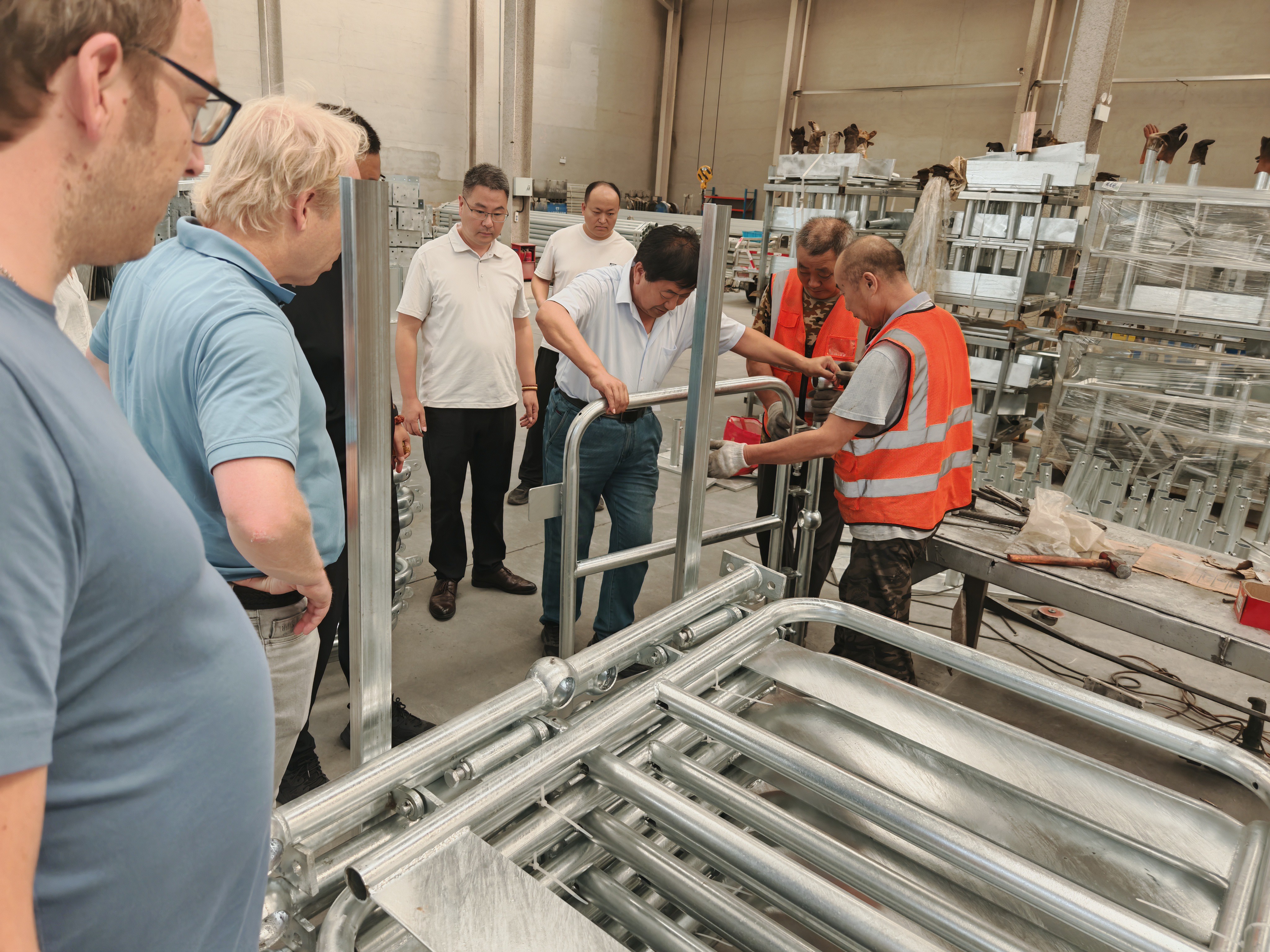
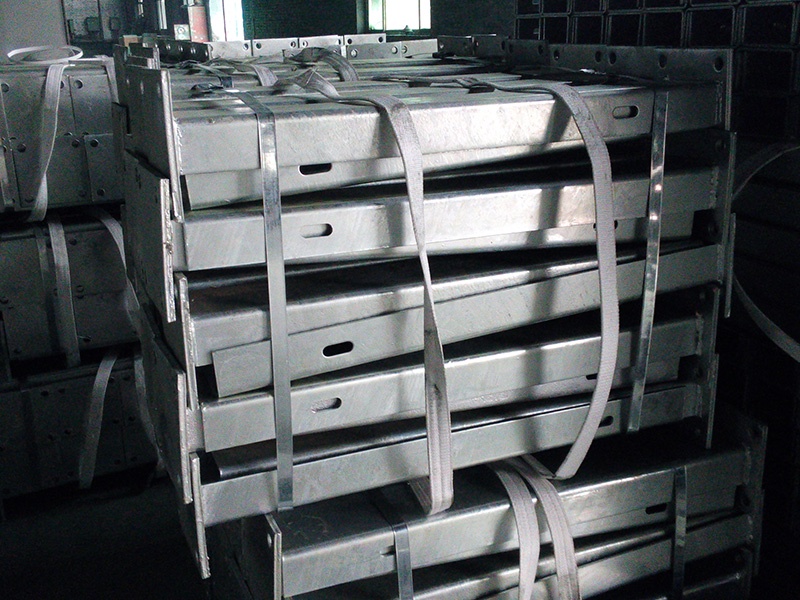
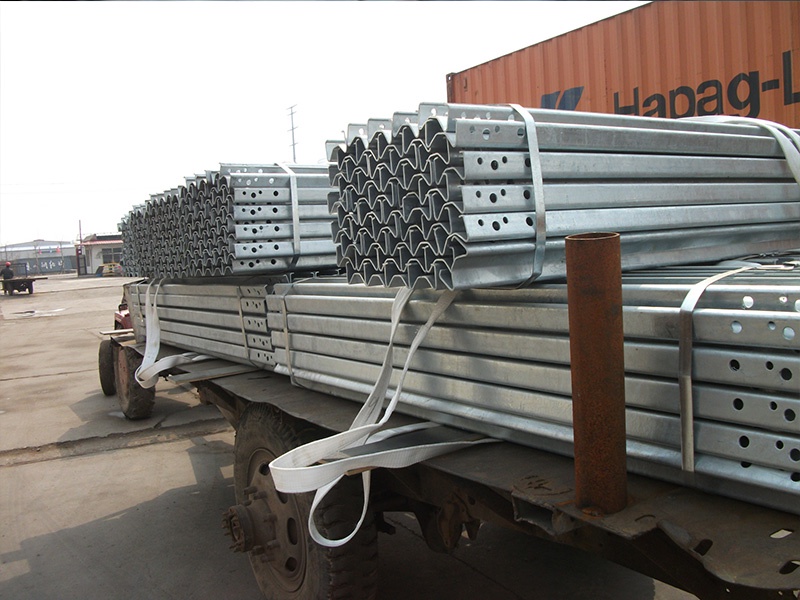
The standard length of highway guardrail is usually understood in two different ways: the length of each individual rail beam and the total length of a connected guardrail section along the road. In practice, the individual beam is often manufactured in a standard module so it can be transported, overlapped, bolted, and replaced without changing the entire barrier line. The overall installed length, however, is determined by the roadway layout, post spacing, end treatment, and the length of need established in the design.
For many highway projects, the common steel beam section is produced in a standard modular length, while posts are arranged at fixed intervals to create a continuous barrier. That is why a simple question about length quickly turns into a question about system geometry. A guardrail is not a single strip of steel placed beside the pavement. It is a coordinated assembly of beam, post, spacer or blockout, fasteners, terminals, and foundation support. If one part is adjusted, the effective performance of the full line may also change.
Why standard length is modular rather than arbitrary
Highway guardrails are typically made in repeatable lengths because road safety hardware must be easy to fabricate, stack, ship, and install in sequence. A modular beam length allows crews to overlap adjacent panels at bolt locations and maintain continuity in the traffic-facing line. This approach also simplifies replacement after impact damage, since one or several damaged panels can be removed without rebuilding the entire run.
Length standardization also supports compatibility with post spacing. In many layouts, ordinary guardrail sections use post spacing of 4 meters, while more critical locations may require 2 meters to improve stiffness and load distribution. This difference matters on curves, bridge approaches, embankment edges, narrow shoulders, and transition zones where impact conditions may be less forgiving. A beam that works with one spacing arrangement may need a different connection pattern or reinforcement when spacing is reduced.
Because of that, asking for the standard length of highway guardrail should include at least three details: whether the question refers to the rail beam itself, the distance between posts, or the required installed barrier length along the roadside hazard.
What determines the installed length on site
The installed length is rarely chosen for convenience alone. It usually depends on the hazard being shielded and the distance needed for the barrier to capture and redirect an errant vehicle before it reaches the object behind it. If there is a culvert headwall, steep side slope, retaining structure, sign support, or bridge parapet transition, the guardrail may need to start earlier and continue farther than expected from a visual inspection.
Several site conditions often control the final length:
- Roadside geometry. A fill slope, ditch shape, shoulder width, and pavement edge offset all affect how close the barrier sits to traffic and how long it needs to run.
- Terminal treatment. A run cannot usually stop abruptly; end sections and transitions occupy space and influence the net installed length.
- Curvature. On horizontal curves, nominal linear dimensions may need field adjustment because chord length and arc alignment are not identical.
- Post foundation conditions. Soil strength, concrete pads, drainage structures, buried utilities, and frost-sensitive layers can require revised post locations.
These variables explain why two projects using the same beam profile may have very different total guardrail lengths. The hardware can be standard while the roadside application is not.
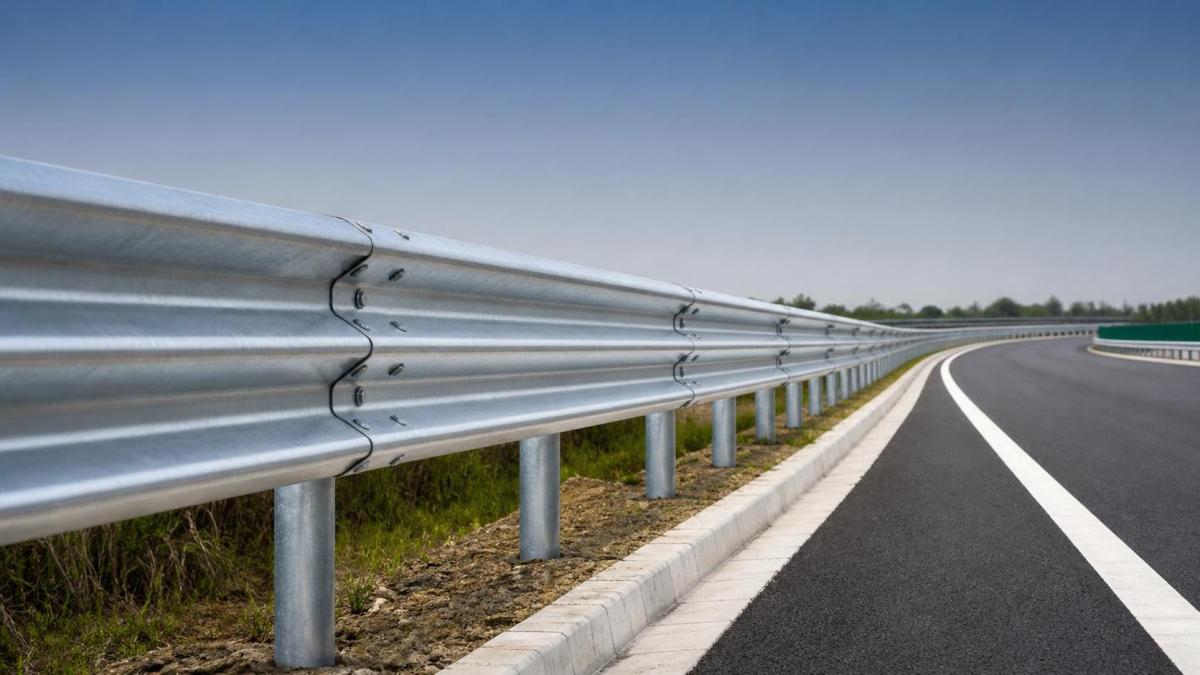
Beam length, overlap, and effective coverage
A common mistake is to multiply the number of beams by the nominal beam length and treat that value as the exact protected distance. In reality, guardrail beams overlap at splice locations, so the visible panel length and the net covered length are not always the same. The overlap is intentional. It improves continuity and affects how impact forces travel through the rail line into the posts and foundation.
This is one reason fabrication drawings need to match installation drawings. Hole positions, slot dimensions, and bolt patterns cannot be assumed from appearance alone. If drilling or punching differs from the specified layout, the crew may discover that the panels cannot be joined correctly in the field, or the overlap faces the wrong direction relative to traffic. Either problem can delay installation and create rework.
Length is tied to material and processing quality
Even when dimensions are standard, dimensional stability depends on how the steel is processed. Beam forming, bending radius control, drilling accuracy, edge condition, and galvanizing thickness can all affect fit-up during installation. Long members that are slightly twisted or out of tolerance may still look acceptable in storage, but once several pieces are connected in a line, the alignment error becomes obvious.
That is why highway guardrail production usually involves more than rolling steel into shape. The process may include drilling, bending, rust removal, shot peening, non-destructive testing where required, galvanizing, and painting for systems that specify an additional coating. Each stage influences whether the finished parts assemble cleanly and maintain their geometry after transport.
Transport itself also matters. Guardrail beams and posts are long steel components, so bundling, lifting points, and trailer support spacing should be planned carefully. Poor support during delivery can introduce bending or surface damage that complicates field installation. A nominally standard beam length loses its practical value if it arrives distorted.
Posts, base support, and why section length cannot be judged by beam alone
A guardrail line performs as a system, not as an isolated rail strip. The posts transfer impact loads downward, and the foundation or base detail determines how much movement is allowed before the barrier disengages from its intended line. In some highway guardrail systems, a component such as H Post Base Plate is used to provide vertical support and load transfer, helping disperse force into the foundation so the barrier is less likely to overturn or shift excessively. Where drawings call for it, the selected form may be C-type, U-type, Z-type, or H-type, depending on the structural arrangement and connection detail.
This is also where the spacing values become meaningful. If posts are set at 4 meters in ordinary sections and reduced to 2 meters at critical points, the same roadway length may require a very different quantity of steel posts, bolts, spacers, and foundation work. The total barrier run measured along the road may remain unchanged, but the structural behavior of that run changes noticeably.
Situations where “standard length” is often misunderstood
Confusion usually appears during quoting, drawing review, and field measurement. One person may ask for the standard length and mean the beam module; another may mean the total required roadside protection; someone else may be looking for shipping length limitations. Those are different questions and should be separated early.
Some frequent misjudgments include assuming that all roads use the same guardrail section, measuring only the exposed hazard instead of the full length of need, ignoring terminal length, or treating bridge approach transitions as ordinary roadside runs. Another common issue is ordering straight standard pieces for a location that includes curvature or elevation change, then trying to force alignment during installation. Steel guardrail has some field tolerance, but it should not be expected to compensate for a poor layout.
How length should be confirmed before manufacturing
The cleanest approach is to confirm the alignment drawing, post spacing, beam profile, splice direction, terminal arrangement, and quantity schedule together instead of treating them as separate documents. If manufacturing is based on customer drawings, the drawings should clearly identify where standard modules are used and where nonstandard fabrication is needed. This is especially important when a project includes mixed sections, such as different rail shapes, reinforced zones, or transitions into rigid barriers.
It is also sensible to review whether the specified lengths are practical for galvanizing tanks, truck loading, unloading access, and handling at the site. A design can be structurally sound on paper and still create avoidable installation difficulties if fabrication and logistics were not considered at the same time.
So, what is the standard length of highway guardrail? In most cases, it refers to a modular rail beam length used to build a continuous barrier system, but the installed guardrail length along a road is project-specific. The correct answer depends on beam format, overlap, post spacing, terminal design, and the roadside condition being protected. Without those details, a single number can be technically incomplete even if it sounds familiar.
Leave A Reply
Need More Details?
Contact me for details on creating and managing design projects, project features, and services and prices
consult
Our company was established in 1998. It‘s a Chinese pioneer enterprise integrating production and sales, committed to providing high-quality steel products to customers at home and abroad.

First class quality service and professional after-sales team.
Get in Touch
*We respect your confidentiality and all information are protected.