






NEWS
Categories List
Recent Posts
 Netherlands Client Delegation Visits Our Factory to Advance European Highway Guardrail CooperationOct 10, 2026
 AASHTO M180 Guardrail Requirements: A Practical Guide to Material ComplianceOct 10, 2026
 Port Safety Barriers: Selecting Protection for Vehicle Lanes and Loading AreasOct 10, 2026
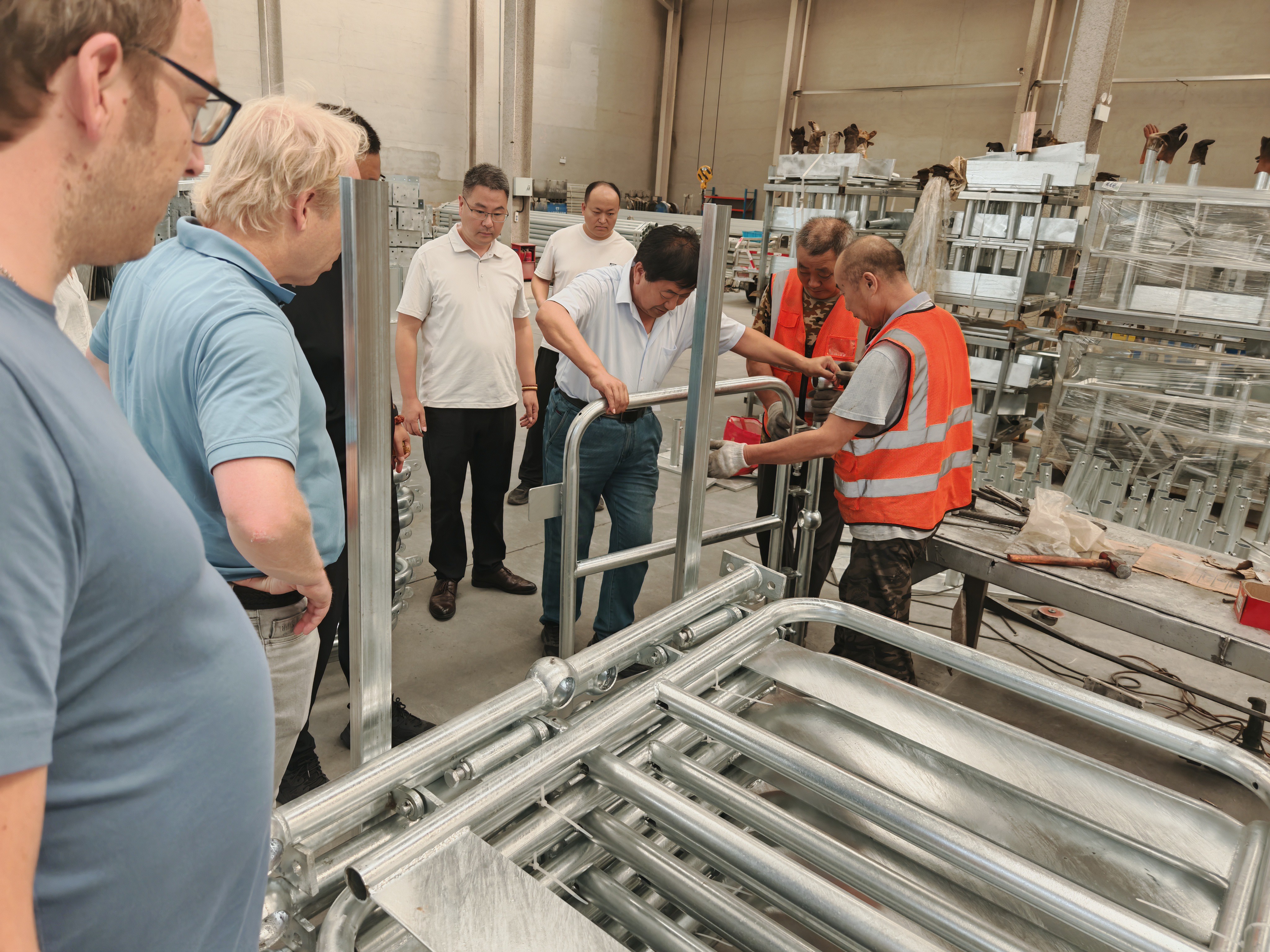
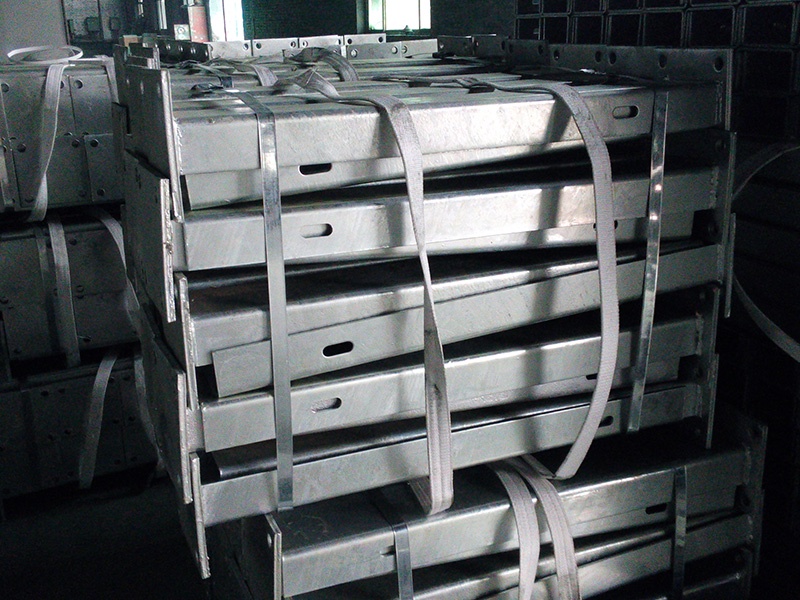
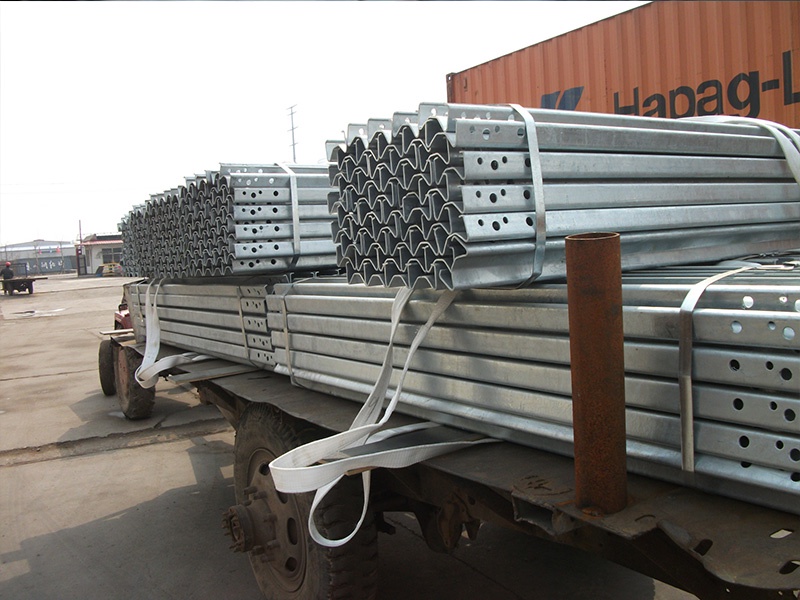
For most buyers, the real question is not simply “what is the price per meter?” but “what will this guardrail system actually cost once it meets the road class, local standard, site conditions, and installation method?” Highway guardrail pricing can vary widely because the visible steel is only one part of the total. Material grade, beam profile, coating thickness, terminal treatment, post spacing, transport distance, and on-site work all shape the final number.
That matters in transportation projects because a low initial quote can become an expensive choice if it misses compliance requirements, creates installation delays, or shortens service life in corrosive environments. In practice, guardrail procurement is less about finding the cheapest line item and more about balancing crash performance, durability, fabrication quality, and delivery certainty.
What usually drives highway guardrail cost
The biggest cost driver is usually the system specification. A standard W-beam roadside barrier for a conventional road corridor is priced very differently from a stronger system required for bridges, medians, high-speed sections, or areas with elevated crash risk. Buyers comparing prices need to confirm they are comparing like for like: same beam thickness, same post type, same coating standard, same terminal design, and same accessory package.
Steel cost is the most obvious variable. When raw steel prices move, guardrail quotations move with them. But fabrication also matters. Drilling, bending, rust removal, shot peening, non-destructive testing, galvanizing, and painting all add cost depending on the project specification. For export or public-sector work, tighter dimensional tolerances and traceability requirements can also raise manufacturing cost even when the product looks similar at first glance.
Galvanizing deserves separate attention. In many road projects, hot-dip galvanizing is treated as a routine item, but coating quality has direct implications for maintenance cycles and lifecycle cost. A thinner or poorly controlled coating may reduce the purchase price, yet increase the risk of early corrosion, especially in coastal zones, humid regions, industrial corridors, or roads exposed to deicing salts.
Why “price per meter” can mislead buyers
In guardrail purchasing, per-meter pricing is useful only as a screening tool. It often excludes parts that become significant in a real project: terminals, transition sections, bolts, blockouts, spacers, reflectors, special posts, base plates, painting, freight, unloading, and installation. Some quotations also assume easy roadside access and standard soil conditions. Once the site includes embankments, narrow shoulders, rock drilling, utility conflicts, or traffic management measures, the installed cost changes.
A better way to evaluate cost is to separate it into four buckets:
- Material supply cost
- Fabrication and protective treatment cost
- Logistics and packaging cost
- Installation and site management cost
This breakdown helps buyers identify where a “cheap” quote is actually incomplete. It also makes supplier comparison more realistic, especially when several manufacturers are bidding from different production bases or serving different export markets.
The parts of the system that buyers often under-budget
End treatments are a common blind spot. Many project teams focus on beam and post quantities first, then discover later that terminals materially affect both compliance and safety performance. In high-speed applications, the end of a guardrail is not a minor accessory. It is a safety-critical component that influences how impact energy is managed and how the vehicle behaves during a collision.
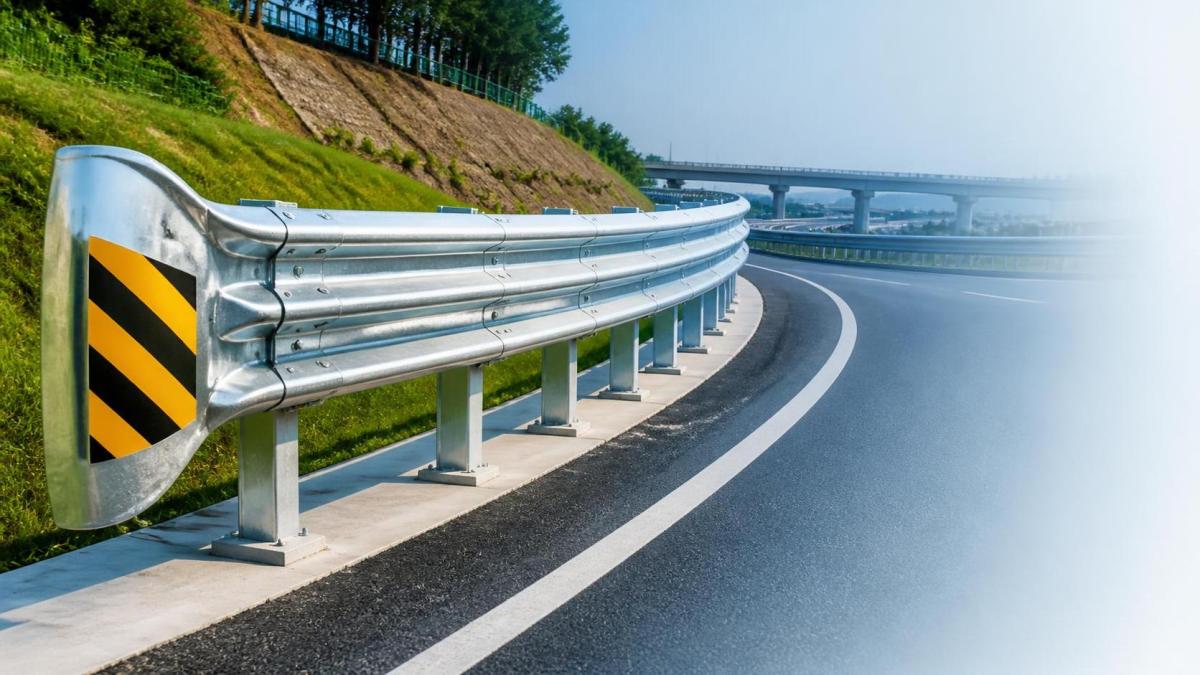
For example, a Fishtail Terminal is used in highway guardrail systems as an end treatment option designed to absorb impact energy, reduce the risk of the rail piercing the vehicle body, and guide the vehicle to decelerate along the barrier more smoothly. In suitable projects, buyers may look at whether such components use hot-dip galvanized coating for corrosion resistance and whether they comply with relevant standards used in the destination market. The point is not to add features for their own sake, but to avoid treating terminal performance as an afterthought when it affects both approval and field safety.
Another underestimated item is transitions. Where guardrail connects to a bridge rail, concrete barrier, or another containment system, the transition section may require different steel members, additional reinforcement, or project-specific fabrication. These details can quickly change the cost structure.
Installation cost depends more on the site than many expect
On straightforward terrain, installation may be relatively predictable. On constrained sites, it rarely is. Soil type affects post-driving efficiency. Mountain corridors may require more manual positioning, specialized equipment, or partial drilling. Urban roadside work may require night shifts, lane closures, and stricter traffic control. In remote regions, the logistics burden alone can exceed what buyers initially expect from the manufacturing quote.
That is why experienced buyers ask early questions such as:
- Can posts be driven directly, or is pre-drilling required?
- Are there utility lines or drainage structures near the alignment?
- Is there enough access for transport and installation equipment?
- Will work require phased traffic management or short possession windows?
- Are there bridge sections, culverts, or retaining walls that need special details?
If these questions are not resolved before procurement, cost overruns often appear not in steel supply, but in site execution.
How standards and compliance affect price
Guardrail cost is tightly linked to the standard the system must satisfy. Different countries and agencies use different testing, geometry, coating, and acceptance requirements. Buyers should be careful with statements such as “meets international standards” unless the exact applicable standard and project acceptance criteria are clear. A system accepted in one market may still require modification, additional documentation, or retesting for another. Where requirements are unclear, the prudent position is to mark them as 【待核实】 before locking a supplier decision.
Certification is only part of the issue. Manufacturing consistency matters just as much. In transportation infrastructure, repeated dimensional accuracy, weld quality where applicable, coating control, and lot traceability are not paperwork details; they influence whether components fit correctly on site and whether the installed system performs as intended over time.
What transportation buyers should compare besides unit price
When buyers request quotations, they often get faster and more usable results if they provide drawings, alignment plans, quantities, coating requirements, and the destination standard upfront. A manufacturer that can quote, design, manufacture, and support installation around those inputs is usually in a stronger position to reduce execution risk than one offering only a generic catalog price.
In practical terms, a serious comparison usually includes the following:
This kind of comparison tends to reveal that two quotes with similar headline prices may have very different total project implications.
When a higher quote may actually be the cheaper option
In transport infrastructure, the cheapest procurement outcome is often the one that minimizes rework, delay, and premature replacement. A higher quote may still be commercially better if it includes verified coating performance, stronger fabrication control, better packaging for long-distance shipment, or design support that helps avoid site conflicts.
This is especially true for projects exposed to aggressive weather or strict acceptance checks. Long service life is not just a technical preference. On road assets with difficult maintenance access, it directly affects the economics of future closures, repair crews, and traffic disruption.
The same logic applies to end treatments. If a project requires an option with reliable cushioning performance and broad compatibility with multiple-country standards, then selecting a proven terminal configuration may reduce downstream approval and operational risk, even if the purchase price is not the lowest available.
What to ask before requesting a final quote
Before asking a manufacturer for a final number, buyers should be ready with a few project basics. Without them, most quotations are only rough budget estimates.
- Total length and road type
- Required drawing set or design basis
- Applicable standard or authority requirement
- Beam profile, post type, and spacing preference
- Coating system and corrosion environment
- Terminal, transition, and accessory requirements
- Project location and delivery terms
- Whether installation is included
If the project is still early-stage, it is reasonable to ask for a budgetary range first and then refine the price after drawings and site conditions are confirmed. That approach is more useful than forcing precision too early and discovering later that the quote omitted critical scope.
The useful way to think about guardrail cost
Highway guardrail cost is best understood as a system cost, not a steel cost. Buyers who focus only on beam price often miss the parts of the project where money is actually won or lost: coating durability, compliance fit, terminal selection, logistics planning, and site installation constraints. For transportation projects, the practical question is not “who is cheapest today?” but “which supply and manufacturing approach will hold up through approval, delivery, installation, and years of roadside service?”
That is usually where the real cost difference shows up.
Leave A Reply
Need More Details?
Contact me for details on creating and managing design projects, project features, and services and prices
consult
Our company was established in 1998. It‘s a Chinese pioneer enterprise integrating production and sales, committed to providing high-quality steel products to customers at home and abroad.

First class quality service and professional after-sales team.
Get in Touch
*We respect your confidentiality and all information are protected.