






NEWS
Categories List
Recent Posts
 Netherlands Client Delegation Visits Our Factory to Advance European Highway Guardrail CooperationOct 10, 2026
 AASHTO M180 Guardrail Requirements: A Practical Guide to Material ComplianceOct 10, 2026
 Port Safety Barriers: Selecting Protection for Vehicle Lanes and Loading AreasOct 10, 2026
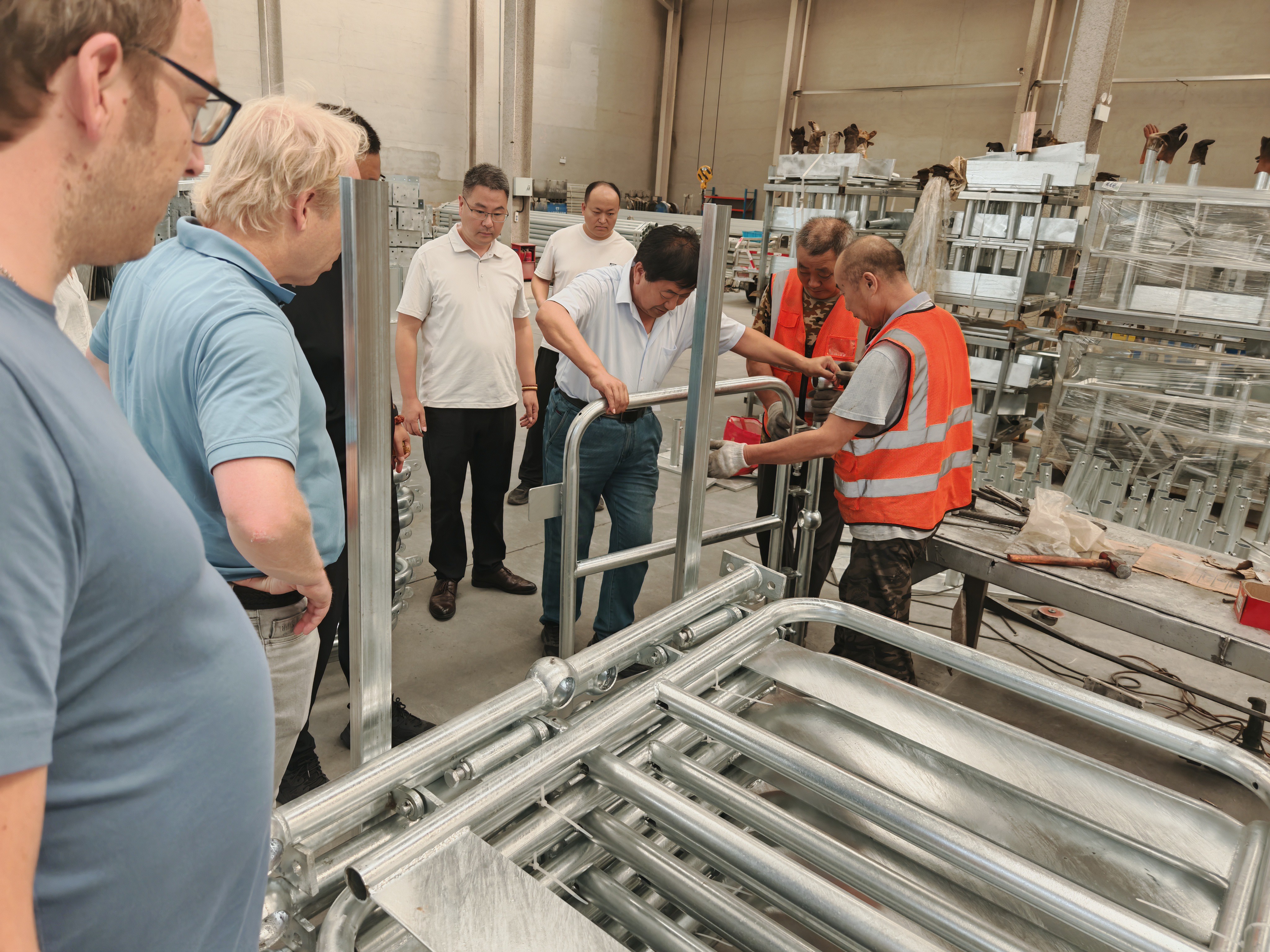
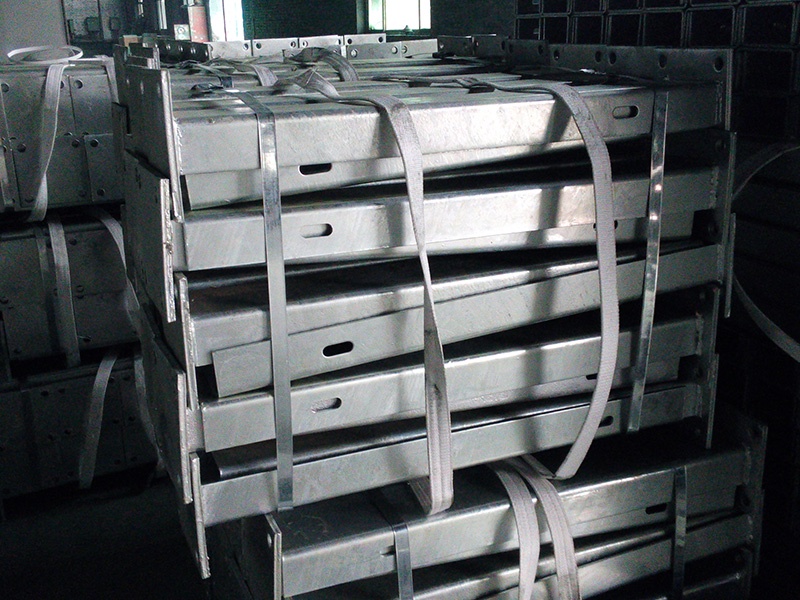
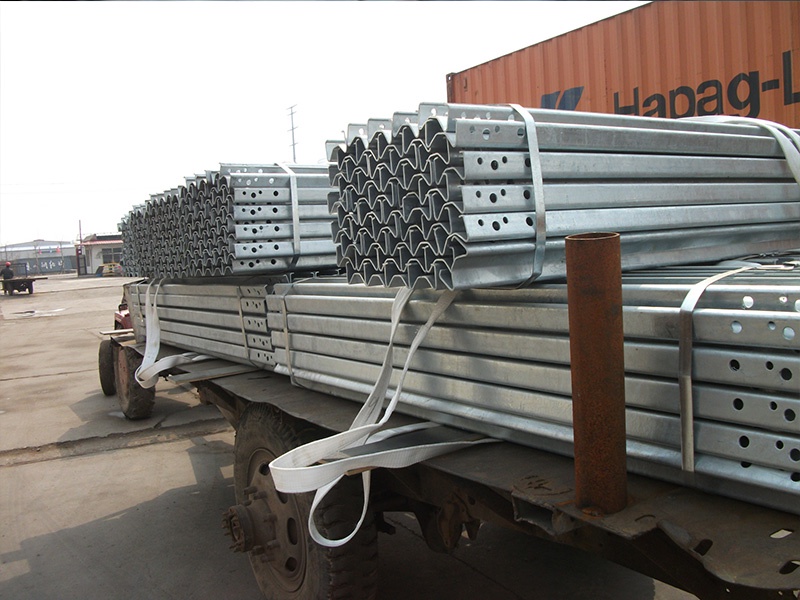
Highway guardrail manufacturing begins with a precise match between road conditions and component geometry. A guardrail is not simply a bent steel beam. Its profile, thickness, hole spacing, post layout, splice position, and terminal arrangement must all work together so the system can redirect a vehicle in a controlled way instead of tearing, snagging, or collapsing too early. If the original drawing is slightly off, the problem usually appears later during assembly, where mismatched slots, incorrect post centers, or distorted sections slow installation and weaken the barrier line.
Most highway guardrails are produced from steel coil or steel plate selected for forming stability and structural consistency. Before fabrication starts, the material is usually checked for thickness tolerance, surface condition, flatness, and traceability. Mill scale, oil contamination, edge defects, and excessive waviness can all affect later operations. A beam with poor edge quality may crack during forming, while uneven base material can make bolted joints difficult to align in the field. In transport infrastructure work, dimensional control is as important as raw strength because every panel has to connect cleanly across long distances.
From Drawing to Production Layout
The first manufacturing stage is usually document review rather than machine work. Fabricators confirm the beam type, rail length, post section, terminal details, connection hardware, and surface treatment sequence. Hole locations are especially sensitive. If slot patterns shift even slightly, the guardrail may still look acceptable in the workshop but fail to fit properly once posts and splice bolts are installed on site. For that reason, production drawings are often translated into process sheets that define cutting length, punching sequence, bend radius, and inspection points for each batch.
At this stage, the end treatment also matters. An ordinary run of beam and an energy-managing terminal do not behave the same way during impact. In some highway guardrail systems, an end section such as Fishtail Terminal is introduced where the exposed rail end needs controlled geometry. When such a component is specified, the production team has to coordinate its dimensions, coating condition, and connection compatibility with the rest of the rail line rather than treating it as an isolated accessory.
Cutting, Punching, and Drilling
Once specifications are locked, steel is cut to length and prepared for hole-making. Depending on the product design, manufacturers may use punching, drilling, or a combination of both. Punching is efficient for repeated slot patterns, but tool wear has to be monitored because worn dies can leave burrs, deform edges, or change hole size. Drilling is slower yet sometimes preferred for thicker parts or locations that need tighter dimensional control.
Burr removal is not a cosmetic step. Sharp edges can interfere with galvanizing, expose coating weak points, and create handling hazards during installation. The same applies to hole distortion. A slightly oval opening may still accept a bolt in the factory, but under field conditions, where rails, posts, and spacers must line up quickly, those small errors accumulate. Good production practice therefore includes regular gauge checks, fixture verification, and sampling against the approved drawing rather than relying only on machine settings.
Roll Forming and Bending
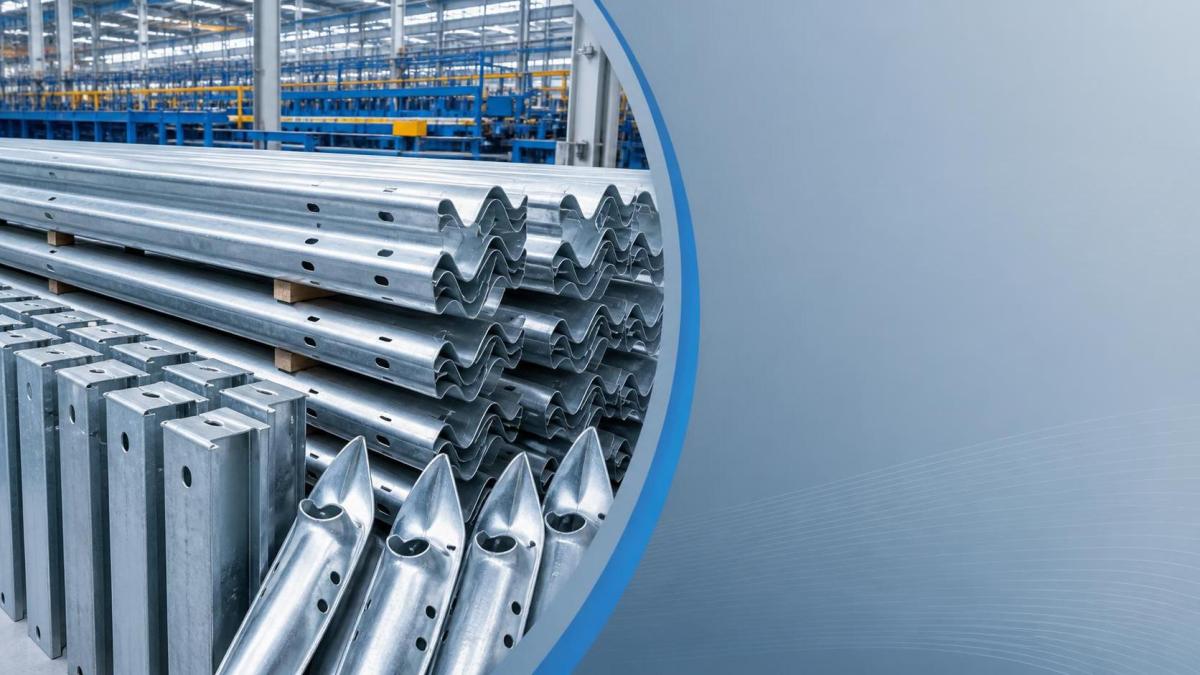
The recognizable guardrail profile is created through forming. For corrugated highway beams, this commonly means passing the steel through a sequence of rollers that gradually shape it without creating sudden stress concentrations. Forming has to balance efficiency with material behavior. If the rollers are set too aggressively, the steel can thin at the crest or crack near the bend line. If forming pressure is too light, the section may spring back and miss its target profile.
Curved sections, transition pieces, and some terminal elements may require additional bending operations after the primary profile is formed. Springback compensation becomes important here. Steel does not remain exactly where it is bent, so experienced shops set tooling based on the specific material grade, thickness, and bend radius. Consistency across batches matters because even a small shape deviation can affect nesting, transport stacking, and field alignment.
Post components go through a similar discipline. Whether the design uses C-posts, U-posts, sigma posts, or box sections, straightness and flange geometry affect embedment and rail height. A post that twists during fabrication can create a chain of installation adjustments that should never have been necessary.
Surface Preparation Before Coating
Before corrosion protection is applied, the steel surface has to be cleaned thoroughly. Residual oil, rust, oxide scale, and fine fabrication debris reduce coating adhesion and can trap defects beneath the protective layer. Surface preparation may include degreasing, rust removal, abrasive cleaning, or shot peening depending on the component type and coating process.
Shot peening and blasting are often confused, but they are not always interchangeable. One may be used to clean and texture the surface, while the other may also alter surface stress conditions. The selected method should suit the drawing requirements and downstream finish. If the surface is overblasted, dimensional edges and thin features may be affected; if it is underprepared, the coating may appear continuous while hiding poor bonding. In guardrail production, the best coating line cannot compensate for weak pretreatment.
Galvanizing and Optional Painting
Corrosion resistance is one of the defining properties of a highway guardrail system because the components remain exposed to rain, road spray, temperature cycling, and, in some regions, deicing chemicals. Hot-dip galvanizing is widely used because it coats both visible surfaces and many hard-to-reach areas with a zinc layer that protects the underlying steel. The process typically involves cleaning, fluxing, immersion in molten zinc, and controlled withdrawal.
Good galvanizing is not judged by brightness alone. Manufacturers look for coating continuity, adhesion, drainage behavior, local buildup, bare spots, ash inclusions, and excess zinc accumulation around holes and edges. Thick drips or blocked bolt holes can become assembly problems later. Parts with narrow cavities or overlapping features need special attention because trapped chemicals or poor venting may affect coating quality and safety during processing.
Some projects add paint over galvanized steel when additional visibility or environmental compatibility is required. In that case, the painting process depends on proper surface condition after galvanizing. If zinc ash, moisture, or passivation residues remain, paint adhesion may suffer. A painted finish can improve appearance and add another protective layer, but only when the pretreatment between galvanizing and painting is controlled carefully.
Inspection Is Built Into the Process
Quality control in guardrail manufacturing is not a single final inspection at the loading area. It is a series of checks placed where defects can still be corrected. Dimensional inspection usually covers length, wave profile, hole spacing, section depth, post geometry, and bolt fit-up. Coating inspection may include thickness measurement, adhesion review, visual surface examination, and confirmation that critical contact areas remain usable after treatment.
Non-destructive testing may be applied where the component design, weld detail, or project specification requires additional confidence. This is more common on special steel parts, transitions, or assemblies with welded features than on standard rolled rail alone. The purpose is straightforward: surface appearance does not always reveal discontinuities, and transport infrastructure cannot rely on guesswork where impact performance depends on the integrity of the part.
Another overlooked inspection point is trial assembly. A short mock-up using rails, posts, splice bolts, and terminal connections can expose issues that individual part measurements fail to capture. Parts may all sit within tolerance separately yet still bind when assembled together. Trial fitting is particularly useful when the order includes mixed component types or country-specific dimensional standards.
Packaging, Transport, and Site Readiness
Manufacturing does not end when the coating cools. Guardrail components are long, stackable, and susceptible to abrasion at contact points. Poor packaging can damage freshly galvanized surfaces, distort thin elements, or mix batches that should remain traceable. Rails are commonly bundled with separators or controlled tie points so that lifting does not crush edges or mark the finish excessively.
Transport planning also affects installation efficiency. If posts, beams, spacers, and end treatments arrive without clear sorting, site crews may spend unnecessary time separating components instead of placing them. More serious problems happen when left-hand and right-hand parts are mixed or when the terminal hardware is delivered without the correct matching beam pattern. These are not abstract logistics issues; they can stall a road project even when fabrication quality was otherwise acceptable.
Where Manufacturing Errors Usually Start
Many failures associated with highway guardrails do not begin with dramatic steel defects. They begin with ordinary production mistakes: an outdated drawing revision, inconsistent hole punching, poor vent design for galvanizing, insufficient burr removal, or coating buildup that prevents proper bolt seating. Another frequent misjudgment is treating installation tolerance as a way to absorb factory inaccuracy. Field adjustment has limits. When workers force alignment, the rail line may carry residual stress before it ever faces impact.
Terminal sections deserve particular attention because they are expected to manage energy and vehicle interaction differently from standard beam runs. A fishtail-style end treatment using hot-dip galvanized coating may be selected for strong corrosion resistance, long service life, and compatibility with multiple national standards, but those advantages depend on the accuracy of the underlying fabrication. If the geometry, connection points, or finish are compromised, the intended impact behavior may not develop as designed.
Well-made guardrail is the result of disciplined sequencing: correct steel selection, accurate hole-making, controlled forming, thorough surface preparation, dependable galvanizing, and inspection that follows the product all the way to shipment. When those steps are handled carefully, the finished barrier is easier to install, more durable in service, and more consistent in the way it responds when the road demands it.
Leave A Reply
Need More Details?
Contact me for details on creating and managing design projects, project features, and services and prices
consult
Our company was established in 1998. It‘s a Chinese pioneer enterprise integrating production and sales, committed to providing high-quality steel products to customers at home and abroad.

First class quality service and professional after-sales team.
Get in Touch
*We respect your confidentiality and all information are protected.