






NEWS
Categories List
Recent Posts
 Netherlands Client Delegation Visits Our Factory to Advance European Highway Guardrail CooperationOct 10, 2026
 AASHTO M180 Guardrail Requirements: A Practical Guide to Material ComplianceOct 10, 2026
 Port Safety Barriers: Selecting Protection for Vehicle Lanes and Loading AreasOct 10, 2026
When people search for hot dip galvanized highway guardrails, they are usually not looking for a definition. They are trying to answer a more practical set of questions: whether this corrosion-protection method is worth the cost, where it performs best, what can go wrong in procurement, and how to match guardrail type to actual roadside risk. In transport infrastructure, those questions matter because a guardrail is not only a steel product. It is a safety system expected to keep working for years under impact, rain, de-icing salts, UV exposure, and uneven maintenance cycles.
That is why hot dip galvanizing remains a standard choice in many highway projects. It addresses one of the most persistent lifecycle problems in roadside safety assets: corrosion that starts quietly but eventually weakens posts, beams, connectors, and splice areas. For contractors, designers, and buyers, the real value is not simply that the steel looks protected on delivery. The value is that the system can retain structural integrity and visual serviceability over a long operating period, especially in demanding road environments.
Why hot dip galvanizing still matters in roadside safety systems
A highway guardrail lives in a harsh service environment. It is exposed to standing water, abrasion from debris, vehicle splash, airborne pollutants, and in many regions, chloride attack from marine air or winter road treatment. Paint alone may improve appearance and provide a degree of surface protection, but it is more vulnerable to chipping, edge damage, and coating discontinuity during transport, installation, or minor impacts.
Hot dip galvanizing is valued because the zinc coating forms a durable metallurgical bond with the steel substrate. In practical terms, that means the protection is not just a surface film sitting on top of the metal. It is better able to tolerate handling damage and weathering than many lighter coating approaches. Once installed on open roads, that difference shows up in slower rust development, fewer early intervention points, and more predictable maintenance planning.
For road authorities and EPC teams, this becomes a budget question as much as a technical one. A cheaper barrier component can become expensive if it requires frequent spot repair, premature replacement, lane closures, or repeated labor in difficult traffic conditions. In other words, galvanizing often earns its place through lifecycle economics, not just first-pass material preference.
The benefits are real, but they are not automatic
There is a common assumption that “galvanized” automatically means “long-lasting.” In practice, performance depends on several conditions: coating quality, steel chemistry, fabrication sequence, environmental severity, and installation discipline. A well-made galvanized guardrail can deliver excellent field life. A poorly controlled one may still fail early at drilled holes, cut edges, welded zones, or hidden water traps.
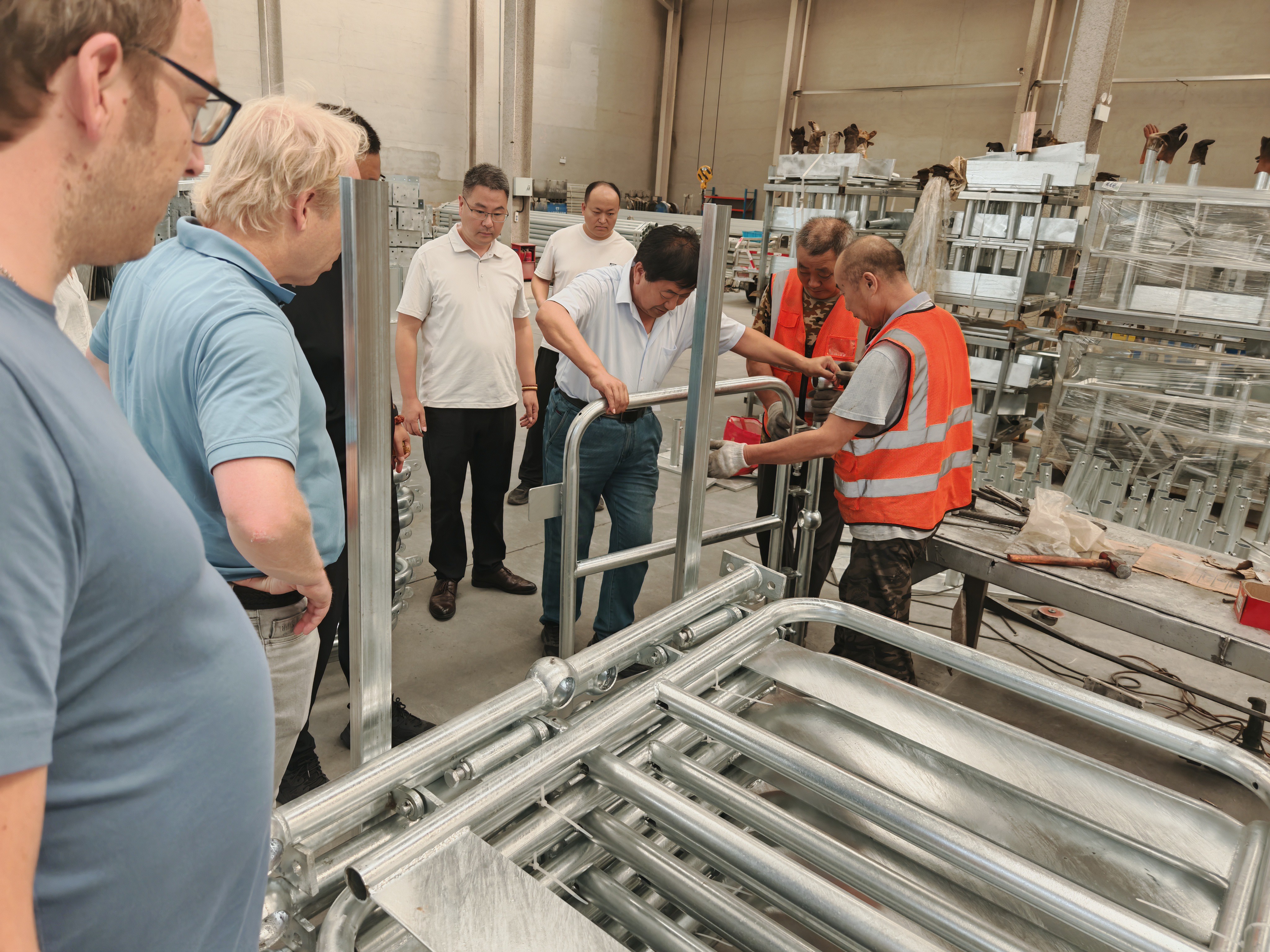
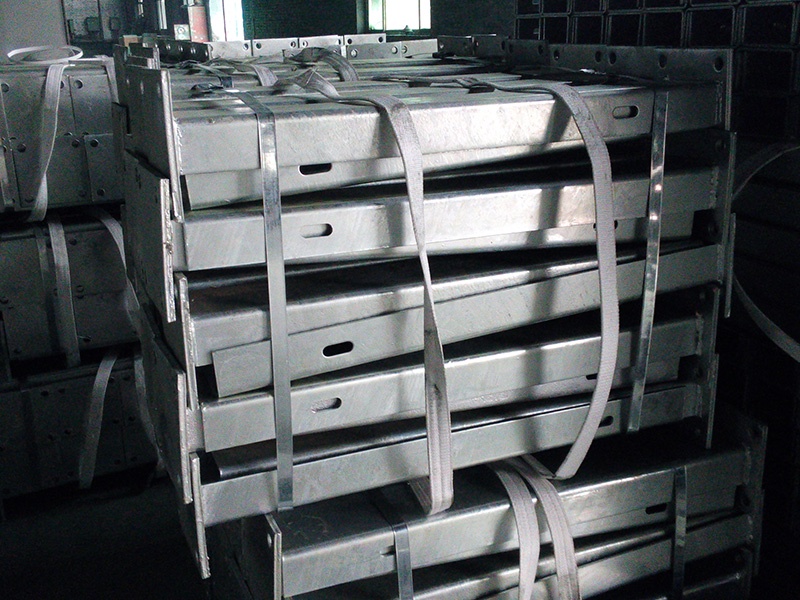
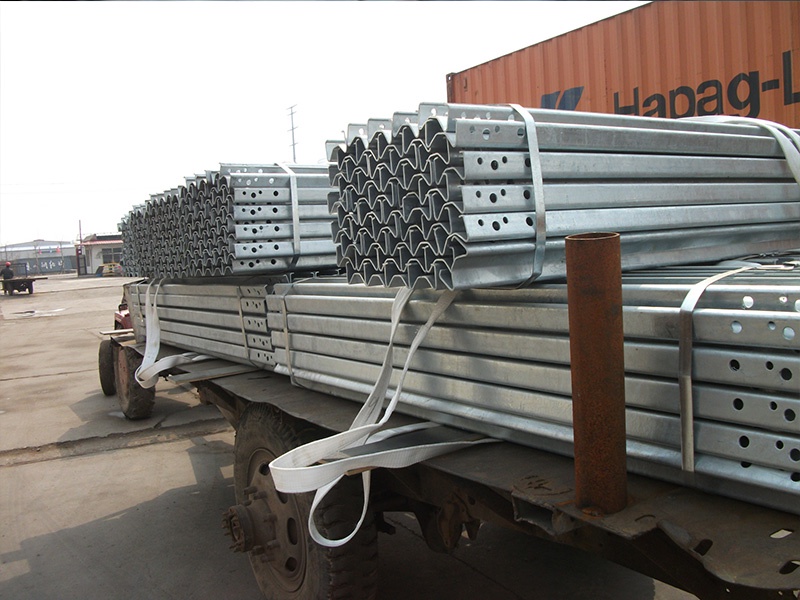
That is why experienced buyers usually look beyond the simple coating label. They ask how the steel was prepared, whether rust removal and shot peening were consistent where required, whether hole positions and bends were completed before galvanizing, and how coating thickness or finish quality is controlled in production. Where the manufacturer also handles drilling, bending, non-destructive testing, galvanizing, and optional painting in one chain, there is often better control over compatibility between design drawings and actual production output.
The strongest procurement decisions are made when corrosion protection is reviewed together with crash performance, dimensional accuracy, and installation conditions. A guardrail is only as reliable as the full system: beam, post, spacer, terminal, fastener, and connection logic.
Where hot dip galvanized guardrails are most suitable
Not every road section imposes the same performance demands. On low-exposure sites, basic configurations may be adequate. On more severe sections, galvanizing becomes more important because maintenance access is harder and failure consequences are higher.
- Highways and expressways with long maintenance intervals
- Bridge approaches and bridge-edge sections where replacement is disruptive
- Coastal corridors and salt-fog environments
- Urban arterials with repeated splash exposure and pollution load
- Mountain or cold-region roads where de-icing chemicals are used
- Median openings, ramps, and diverging sections with elevated impact risk
In these scenarios, the decision is not simply about resisting rust. It is about preserving the designed behavior of the barrier over time. Corrosion can reduce section capacity, compromise fastener performance, and make post-impact repairs more extensive than expected. For infrastructure owners, that translates into risk concentration at exactly the locations where asset reliability matters most.
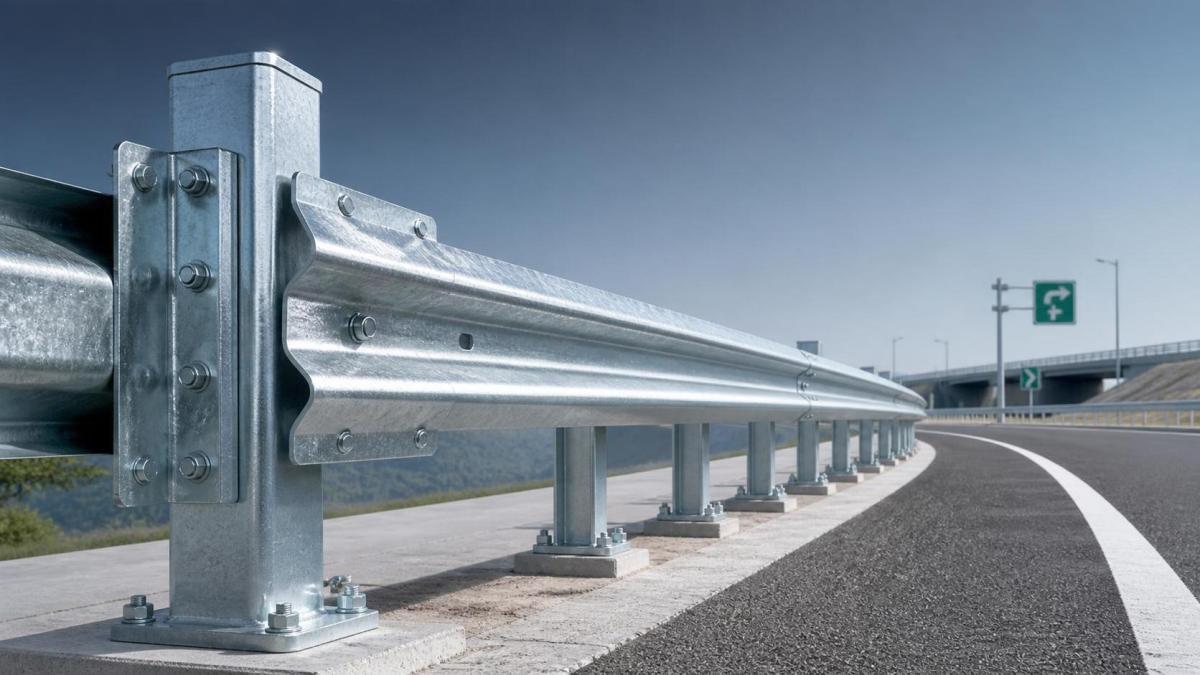
Some high-risk sections also require barrier components with stronger stiffness and impact resistance than a standard layout can offer. In those cases, designers may evaluate reinforced or specialty beam forms as part of the system. One example is Open Box Beam 2.4m, which is used in locations such as bridge sections, median strip openings, ramp divergences, and protection zones around lighting poles or piers. Its open-box cross-section and high section modulus are intended to limit deformation and improve crash behavior where guidance performance and structural stability are under tighter scrutiny.
What buyers should check before selecting a guardrail system
In transport projects, guardrail procurement often goes wrong in the gap between drawings and site reality. A product may look compliant on paper but still create delivery delays, installation mismatches, or maintenance issues after handover. The checklist below is where practical review should start.
1. Environment severity
Ask how aggressive the operating environment really is. Inland dry roads, coastal expressways, and roads exposed to winter salts should not be treated as equivalent. Service life claims should be read carefully and treated as environment-dependent unless independently verified. Where a supplier states very long durability in high-salt-fog areas, that should be regarded as a scenario-based engineering claim, not a universal guarantee.
2. System compatibility
Guardrails are systems, not isolated steel pieces. Beam geometry, post spacing, end treatments, connection details, and installation height all affect roadside performance. Substituting one component without checking the rest of the system can create a compliance problem even when the steel quality itself is acceptable.
3. Manufacturing sequence
This point is easy to miss. Drilling, bending, surface preparation, galvanizing, and any top coating should follow a controlled process. If fabrication changes are made after galvanizing, exposed steel may appear at the most sensitive points. That is especially relevant around holes, edges, and site modifications.
4. Coating consistency and inspection
Buyers should confirm what inspection method is used for coating appearance, thickness, adhesion, and defect control. The right acceptance criteria may vary by project and jurisdiction, so any claim of compliance with “international standards” should still be checked against the standard actually specified in the contract documents【待核实】.
5. Installation and maintenance access
A technically strong product can still become a poor project choice if installation tolerances are too demanding for the site or if future replacement requires long closures. This is particularly important on bridges, narrow medians, and high-traffic ramps.
Hot dip galvanizing versus painted-only thinking
In some buying discussions, galvanizing is reduced to a finish preference. That misses the point. The more meaningful comparison is between a barrier system designed for long-term roadside exposure and one that will need earlier intervention. Paint may still have a role, especially for visibility, warning color requirements, or additional surface protection. Powder coatings in warning colors such as yellow or green may be useful in specific urban or hazard-marking applications. But from an infrastructure standpoint, paint should generally be understood as a complement to corrosion strategy, not a substitute for it.
There is also a practical distinction between appearance retention and structural retention. A barrier can still look acceptable from a passing vehicle while hidden corrosion begins to affect local strength at joints or near the base of posts. That is why lifecycle review should include inspection access and not rely only on visual impressions from routine drive-through checks.
Applications where higher-performance beam sections enter the conversation
Most road networks do not need every section to use the heaviest or stiffest barrier form. Over-specification raises cost and can complicate deployment. But certain sites justify a more robust approach: bridge edges with constrained recovery space, median openings near opposing traffic conflict points, or expressway sections with higher consequences of barrier deformation.
In those locations, a rectangular open-box beam made from high-quality hot-rolled steel plates may be considered because it offers higher bending stiffness and stronger resistance to collision-induced deformation than lighter sections. For buyers assessing this category, the question is not whether a stronger beam sounds attractive. The question is whether the local crash scenario, structural support conditions, and maintenance strategy actually justify the upgrade. That distinction keeps projects grounded in performance needs rather than specification inflation.
Risks that are often underestimated
Several recurring issues deserve more attention in guardrail purchasing and project execution.
- Assuming corrosion resistance alone determines service life, while ignoring installation damage, drainage problems, and site modifications
- Focusing on beam price per meter without accounting for connectors, posts, logistics, and replacement cost under traffic control
- Treating high-risk sections the same as ordinary roadside stretches
- Accepting generic compliance language without matching it to the project’s actual standard and test requirements
- Overlooking the lead-time impact of custom fabrication based on project drawings
These are not minor procurement details. On transport projects, they often decide whether the delivered barrier performs as intended or becomes a source of claims, rework, and unplanned maintenance.
What a sensible decision process looks like
For most B2B buyers, the practical path is straightforward. Start with the road environment, then the risk profile of the section, then the required barrier behavior, and only after that move into coating method and beam form. If the project includes coastal exposure, bridge works, median openings, or structurally sensitive protection zones, hot dip galvanized systems deserve serious consideration because they reduce corrosion-related uncertainty across the asset life.
Then review the supplier’s manufacturing scope. A producer that can work from your drawings or your plan, and that controls fabrication steps such as drilling, bending, rust removal, testing, galvanizing, and optional finishing, is usually better positioned to reduce mismatch between design intent and field delivery. That does not eliminate the need for inspection, but it improves the odds of getting a system that is coherent from design through installation.
In transport infrastructure, guardrail decisions are rarely won by the lowest upfront price or by the broadest marketing claim. They are won by choosing the right level of protection for the road section, the right corrosion strategy for the environment, and the right manufacturing control for the project’s risk profile. Hot dip galvanized guardrails remain relevant because they address all three when specified and executed with discipline.
Leave A Reply
Need More Details?
Contact me for details on creating and managing design projects, project features, and services and prices
consult
Our company was established in 1998. It‘s a Chinese pioneer enterprise integrating production and sales, committed to providing high-quality steel products to customers at home and abroad.

First class quality service and professional after-sales team.
Get in Touch
*We respect your confidentiality and all information are protected.