






NEWS
Categories List
Recent Posts
 Netherlands Client Delegation Visits Our Factory to Advance European Highway Guardrail CooperationOct 10, 2026
 AASHTO M180 Guardrail Requirements: A Practical Guide to Material ComplianceOct 10, 2026
 Port Safety Barriers: Selecting Protection for Vehicle Lanes and Loading AreasOct 10, 2026
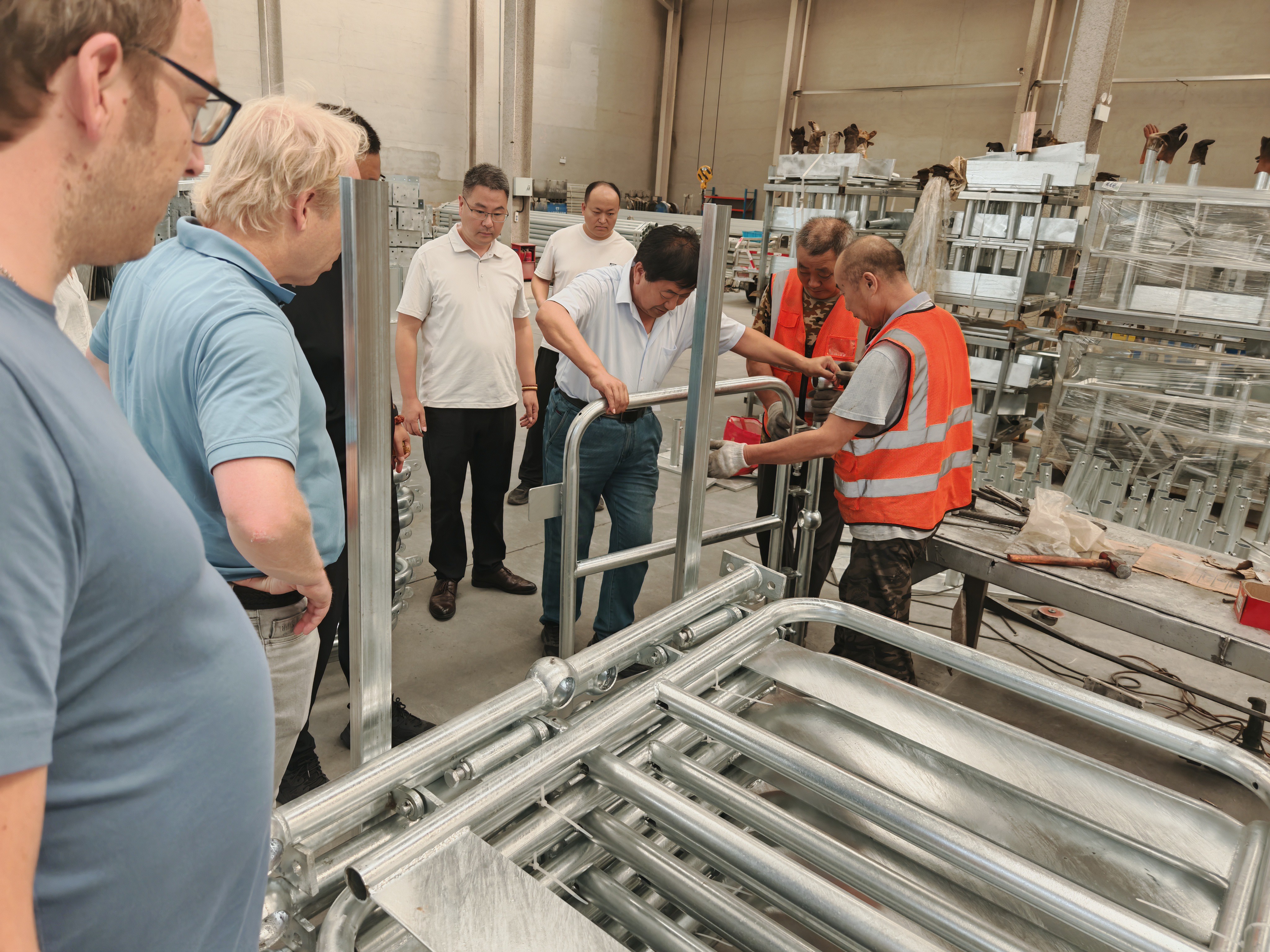
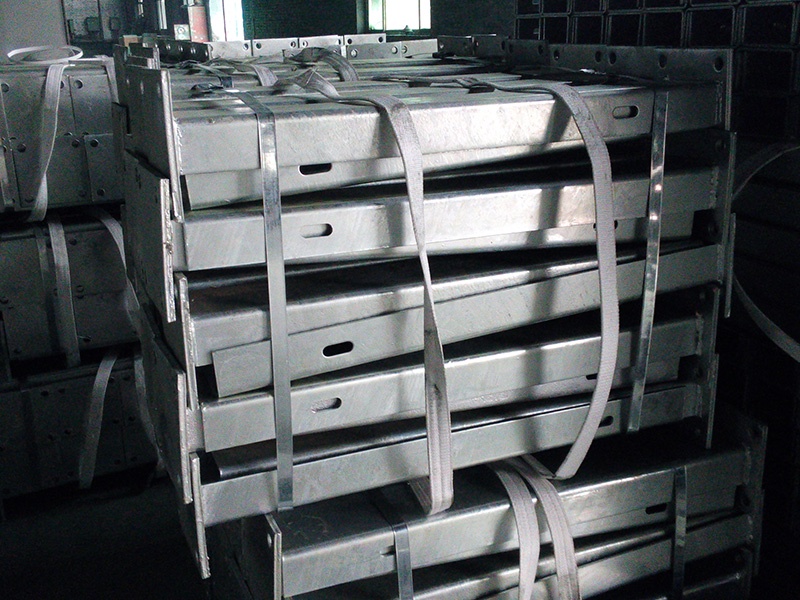
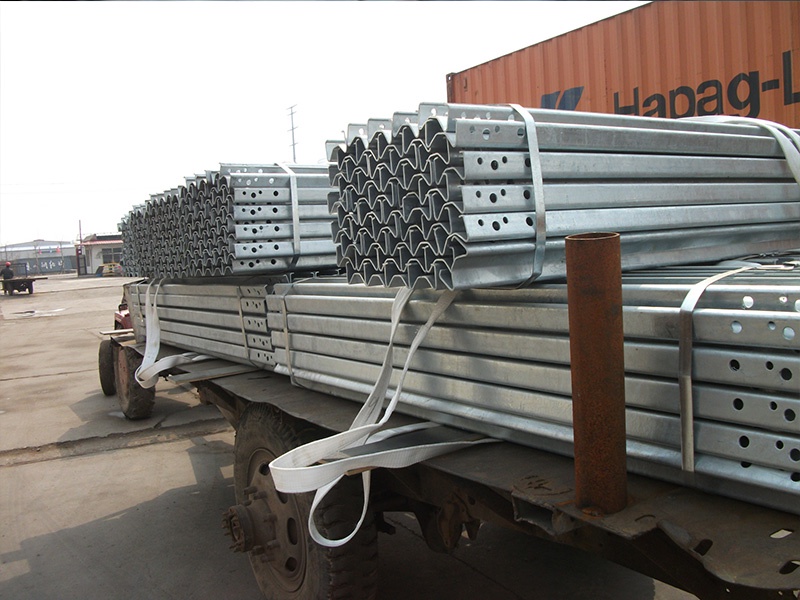
When people search for the difference between a highway guardrail manufacturer and a supplier, they are usually trying to answer a more practical question: who should own the risk on this project? In transport infrastructure, that decision affects far more than unit price. It influences whether the guardrail system matches the site, whether lead times stay under control, whether coating quality holds up in service, and whether installation issues get solved quickly or pushed back across multiple parties.
That matters because highway guardrails are not generic steel components in the way many buyers first assume. A barrier system has to work as a system: beam profile, posts, spacers, terminals, end treatments, coatings, hole positions, tolerances, and installation conditions all interact. On paper, both a manufacturer and a supplier can offer the same product category. In practice, what they control is very different.
The difference is not just definition, but control
A manufacturer produces the guardrail and related steel products directly. That usually means it controls at least part of the engineering interpretation, raw material sourcing, forming, drilling, bending, surface treatment, inspection, and production scheduling. In some cases, the manufacturer also supports design optimization, packaging, shipment planning, and installation.
A supplier, by contrast, may or may not own production assets. Many suppliers are commercial intermediaries, trading companies, stockists, or project consolidators. Some are highly capable and add real value by combining sourcing, documentation, export handling, and after-sales coordination. Others mainly bridge the transaction between buyer and factory.
The key issue is simple: the closer your partner is to production and technical control, the easier it is to manage quality deviations, customization, and schedule changes. The farther away they are, the more important communication discipline and documentation become.
Why buyers confuse the two
In the guardrail business, the market often blurs these roles. A company may call itself a supplier while operating its own fabrication lines. Another may present itself like a manufacturer but outsource forming or galvanizing. For buyers, especially in cross-border procurement, company labels are less important than operational evidence.
That is why asking “Are you a manufacturer or supplier?” is only a starting point. The better questions are:
- Who controls production planning?
- Who owns the quality records?
- Who is responsible if dimensions do not match the drawings?
- Who arranges rework if coating defects appear after delivery?
- Who supports site-specific design or installation issues?
A supplier with strong factory integration can sometimes outperform a weak manufacturer in project execution. But without clarity on responsibilities, buyers can end up paying manufacturer-level prices for supplier-level control.
When a manufacturer is usually the better choice
If your project includes custom drawings, non-standard dimensions, project-specific hole patterns, special coatings, or phased delivery, working directly with a manufacturer is often more efficient. That is especially true for highway expansions, bridge approaches, median openings, interchange ramps, and other locations where standard catalog items do not fully solve the problem.
Manufacturers tend to be stronger in situations where the buyer needs:
- Drawing-based production rather than off-the-shelf supply
- Engineering feedback before fabrication
- Tighter control over bending, drilling, and tolerance consistency
- Traceability across galvanizing, painting, or other finishing steps
- Faster response when design revisions happen mid-project
For example, a manufacturer that handles drilling, bending, rust removal, shot peening, non-destructive testing, galvanizing, and painting under a coordinated process can usually identify production conflicts earlier than a trading-only supplier. That does not guarantee perfect execution, but it reduces the number of handoffs where problems can hide.
This becomes particularly important in projects exposed to salt fog, heavy rainfall, complex alignments, or strict maintenance windows. In those cases, long-term performance depends not only on steel thickness or coating type, but on process consistency.
When a supplier may make more sense
Suppliers are not automatically the weaker option. In some procurement scenarios, they are the more practical one. If you need mixed-source purchasing, local warehousing, shorter commercial cycles, or simplified import coordination, a capable supplier can save time. They can also help when your team is buying multiple road safety products at once and wants a single commercial interface.
A supplier may be the right fit when:
- The project mostly uses standard components
- Delivery speed matters more than product customization
- You need consolidated sourcing across several safety items
- Your internal team prefers one contract party for logistics and paperwork
- The supplier has proven access to reliable manufacturing capacity
But this model works well only when the supplier has real visibility into production. If they cannot answer technical questions without repeatedly “checking with the factory,” that usually signals limited control. In a routine order, that may be acceptable. In a time-sensitive infrastructure project, it can become expensive.
The real procurement question: where do failures usually happen?
Most guardrail procurement failures do not begin with bad intentions. They begin with vague scope. A buyer requests “highway guardrail,” receives a competitive quote, and later discovers that the quote did not fully include bracket details, terminal compatibility, coating expectations, installation accessories, or inspection documents.
This is where the manufacturer-versus-supplier distinction starts to matter in a concrete way.
With a manufacturer, the risk often sits in production capability and internal quality discipline. Can they actually make the system to drawing? Can they maintain consistent dimensions across batches? Can they document material and finishing quality properly?
With a supplier, the risk often shifts toward coordination. Are they transmitting the latest revision? Are they matching the correct factory to the required specification? Are they aligning logistics with the site schedule? If something fails, do they have enough authority to drive corrective action quickly?
Neither model is risk-free. The difference is where the buyer needs to pay closer attention.
What to verify before choosing either one
For transport projects, the safest approach is to evaluate capability rather than marketing position. A few practical checks usually reveal more than a company profile does.
1. Confirm scope responsibility
Ask for a written split of responsibilities covering quotation, design support, manufacturing, inspection, packaging, shipment, and installation guidance. If the answer stays general, expect ambiguity later.
2. Review process depth
If corrosion resistance and long service life matter, ask how finishing is handled and inspected. For example, if the project environment is coastal or high in salt fog, coating selection becomes a lifecycle decision, not a cosmetic one.
3. Check drawing-based execution
Many buyers need a partner who can manufacture according to project drawings instead of pushing only standard sizes. That is especially relevant where bridge sections, median transitions, or hazard protection zones require adjusted details.
4. Ask for quality evidence, not only promises
Look for inspection records, tolerance control procedures, and examples of past documentation. If non-destructive testing or coating checks are claimed, ask what is actually performed and how results are recorded. Exact standards should be verified case by case【待核实】.
5. Evaluate change response
Infrastructure jobs often change after award. A useful partner is not just the cheapest one, but the one that can absorb revision pressure without losing control of schedule and quality.
Where product details start to affect the partner choice
In higher-risk road sections, the conversation quickly moves beyond standard W-beam supply. Buyers may need stronger protective components for ramp divergences, bridge-adjacent zones, pier protection areas, or median strip openings where impact consequences are more severe.
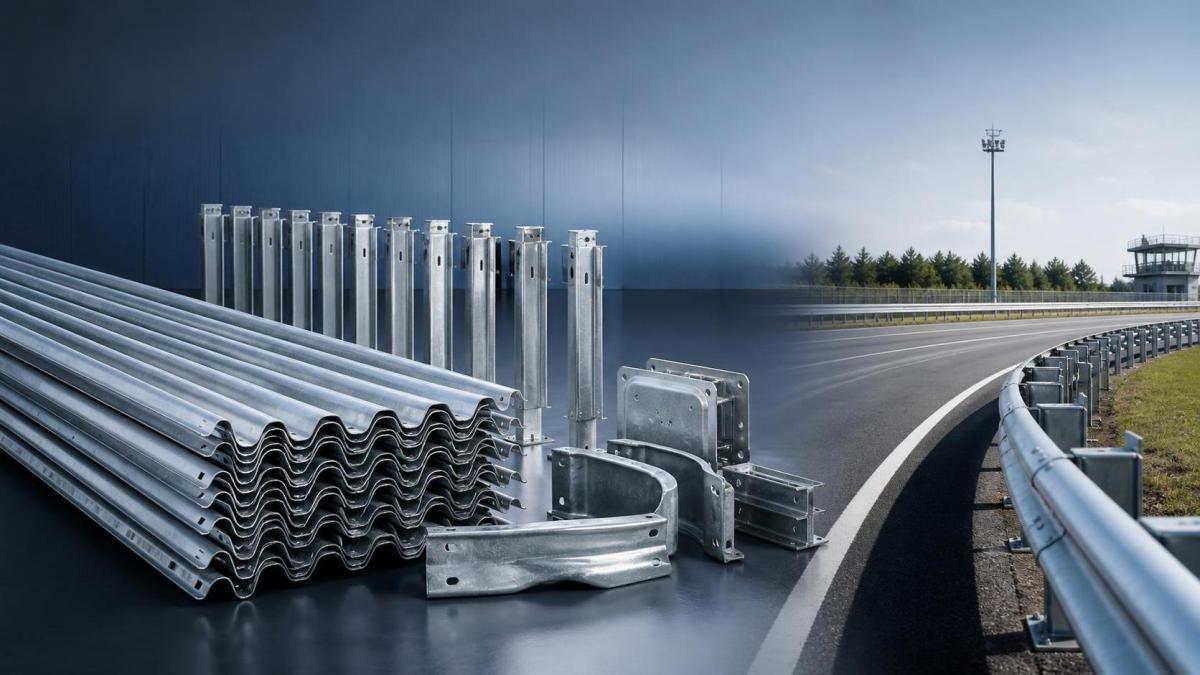
That is where a technically engaged partner has an advantage. For instance, components such as End Cover are relevant in some highway safety systems because they are intended for critical locations that demand higher stiffness, strong impact resistance, and more stable crash performance. When such parts are made from high-quality hot-rolled steel plates and paired with durable surface protection such as zinc-aluminum-magnesium or powder coatings, they may offer a service life of over 30 years in coastal or high-salt-fog environments【待核实 based on project conditions and coating system】. That does not mean every project needs them. It means the supplier or manufacturer should be able to explain when a higher-performance component is justified and when it is unnecessary overspecification.
This point is often missed in low-detail quotations. A company selling only by tonnage may not help the buyer distinguish between a standard section and a location where higher rigidity, minimal deformation, and stronger guidance performance are worth paying for.
Common assumptions that do not always hold up
“Buying direct from a manufacturer is always cheaper.”
Not necessarily. For small or mixed orders, a supplier with stock, bundled logistics, or stronger export execution may lower total delivered cost even if the unit price is higher.
“Suppliers do not understand technical requirements.”
Some do, some do not. The better ones understand applications well and know exactly which factory processes matter. The weaker ones mainly relay messages.
“Manufacturers automatically provide better quality.”
Only if they have stable process control. Owning machines is not the same as running a disciplined quality system.
“Standard products are safer to buy.”
Only if the site really fits a standard solution. On many transport projects, local geometry and impact conditions make standardization useful but incomplete.
A practical way to decide
If the project is technically straightforward, commercially urgent, and built around standard components, a reliable supplier may be enough. If the project requires drawing-based production, integrated process control, coating durability, installation coordination, or performance-focused component selection, a manufacturer or a supplier with strong manufacturing control is usually the better path.
In other words, do not choose based on title alone. Choose based on who can reduce uncertainty in your specific job: specification uncertainty, production uncertainty, logistics uncertainty, and field-performance uncertainty. In highway safety systems, that is usually the difference between a smooth delivery and a costly lesson discovered too late.
Leave A Reply
Need More Details?
Contact me for details on creating and managing design projects, project features, and services and prices
consult
Our company was established in 1998. It‘s a Chinese pioneer enterprise integrating production and sales, committed to providing high-quality steel products to customers at home and abroad.

First class quality service and professional after-sales team.
Get in Touch
*We respect your confidentiality and all information are protected.